Mapping Physics
in Four
Dimensions

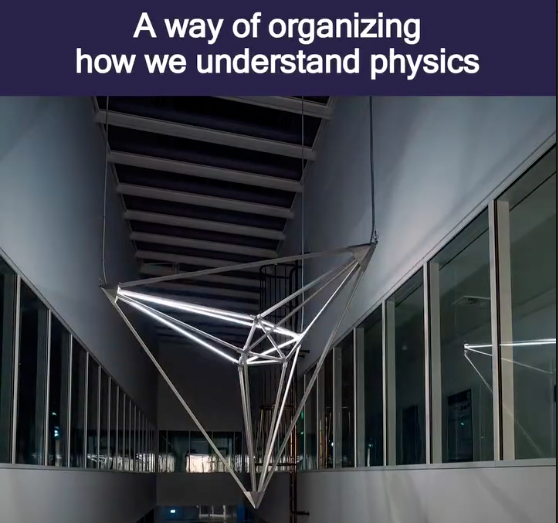
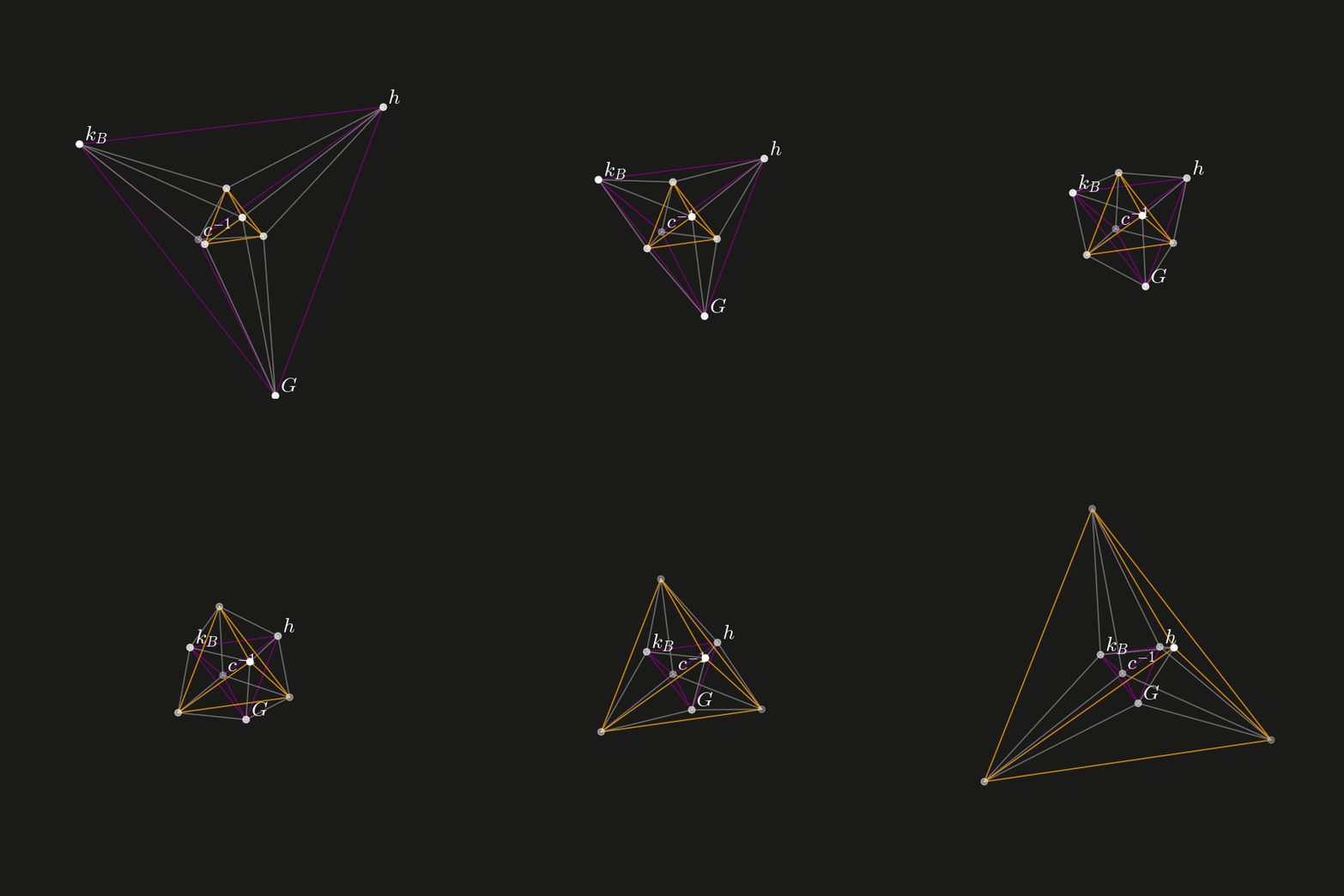
A geometrical (meta)model of theories of physics, based on Planck's four fundamental constants and represented as a four-dimensional polytope: the hexadecachoron.

Viewpoint perspective of Planck's hexadecachoron Planck's hexadecachoron — 4D projection

Four constants,
sixteen theories

G Newton's gravitational constant
c⁻¹ Inverse speed of light
h Planck's quantum of action
kB Boltzmann's constant

In 1899, Max Planck identified four fundamental constants that define universal units for length, time, mass, and temperature. The Hypercube of Physics builds on this insight: by mapping the 2⁴ = 16 combinations of these constants onto the vertices of a four-dimensional hypercube, each vertex corresponds to a distinct physical theory.

To make this structure tangible, we work with the hexadecachoron — the four-dimensional dual polytope of the hypercube. Its sixteen tetrahedral faces represent sixteen theories, from Newtonian mechanics (0, 0, 0, 0) at the centre to the as-yet-undiscovered Theory of Really Everything (G, c⁻¹, h, kB) at its outer shell.

This project develops physical models, projections, and interactive XR experiences to make this structure accessible to students, educators, and the general public.
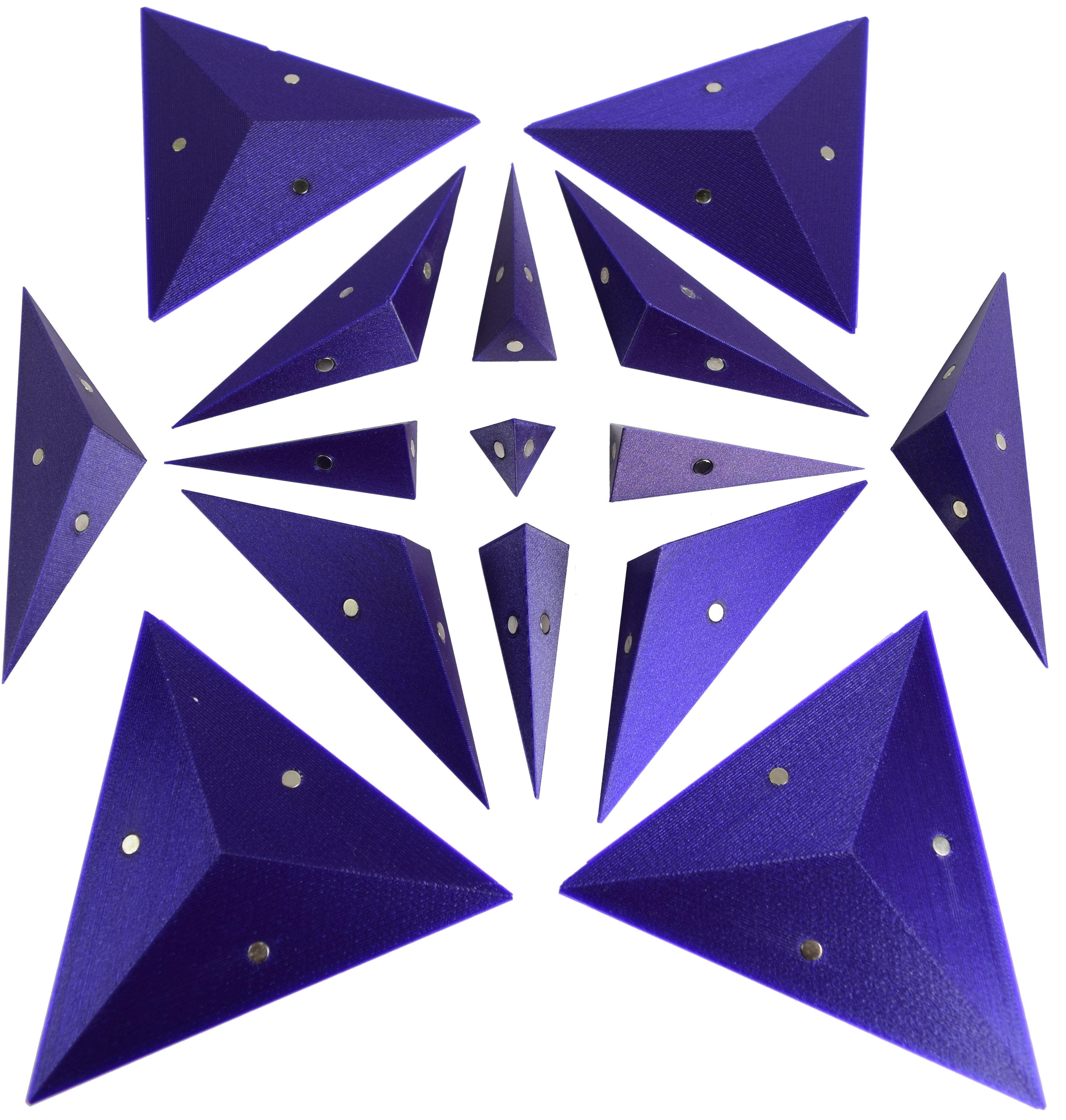
01 — 3D printed

PlanckPlay 3D printed puzzle pieces

PlanckPlay puzzle

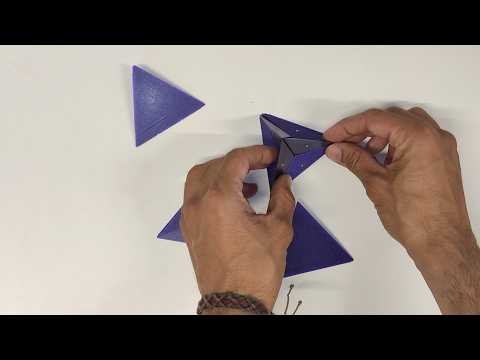
15 modular 3D-printed tetrahedra that assemble into the 16th — the TORE. Designed for home printing, museum use, and classroom exploration. Files available on Thingiverse.

View on Thingiverse →

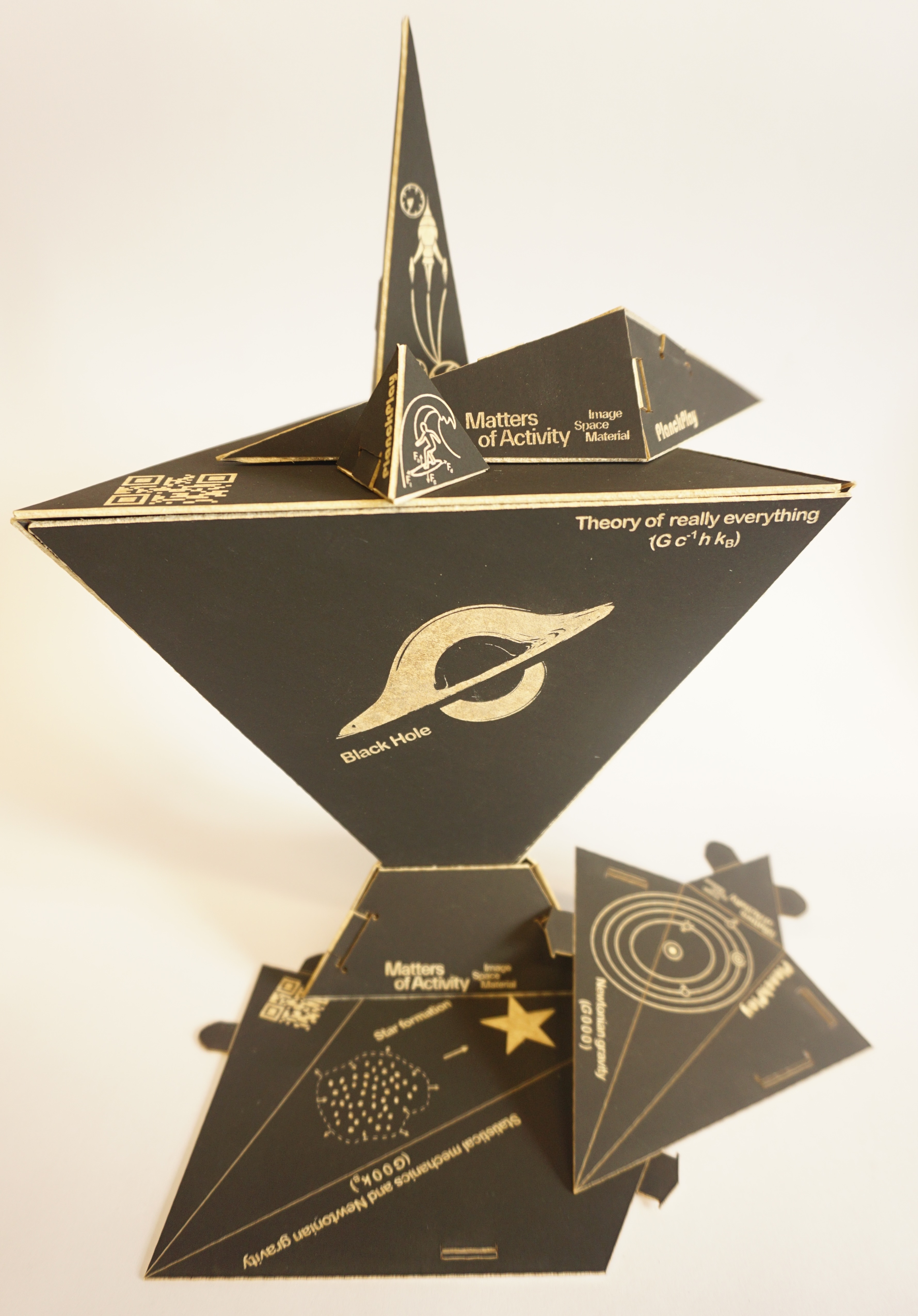
02 — Laser-cut flat pack

PlanckPlay laser-cut flat pack model

Museum edition

Precision laser-cut flat-pack model for museum shop retail. Scored fold lines, slot-together assembly — no glue required. Each face labelled with its corresponding theory.

Coming soon →

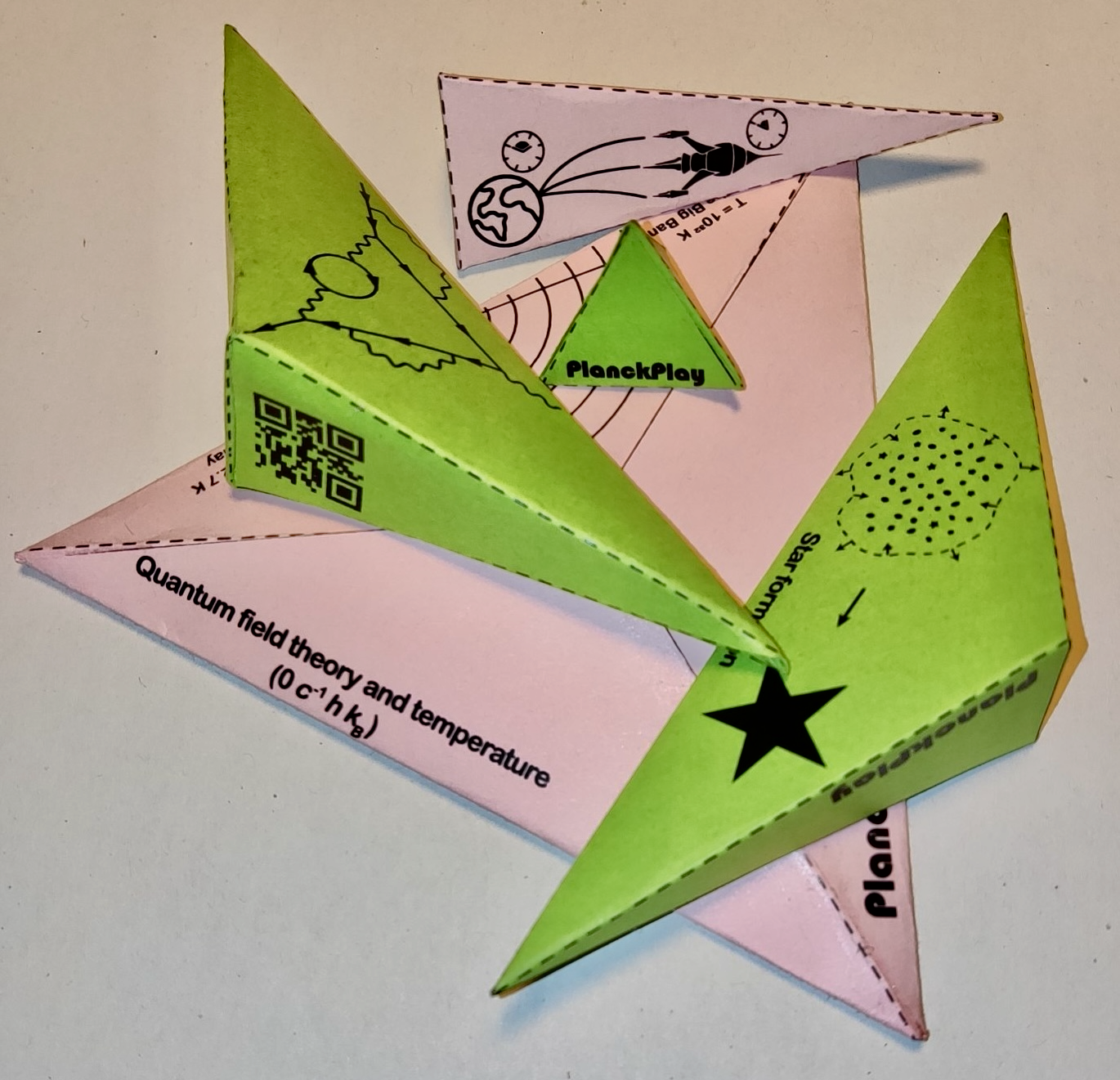
03 — Paper craft

Pieces of the paper crafted PlanckPlay model

Handcraft edition

Printable net for scissors-and-glue assembly. Designed for classrooms and workshops — each face labelled with its physics theory and Planck constant coordinates.

Download PDF →

A map of
physical knowledge

Each tetrahedron in the hexadecachoron corresponds to one of sixteen possible combinations of Planck's constants. Eight are well-established physical theories. Six remain open problems. Two — including the Theory of Really Everything — are speculative frontiers.

(0, 0, 0, 0)
Newtonian Mechanics
Newtonian Mechanics

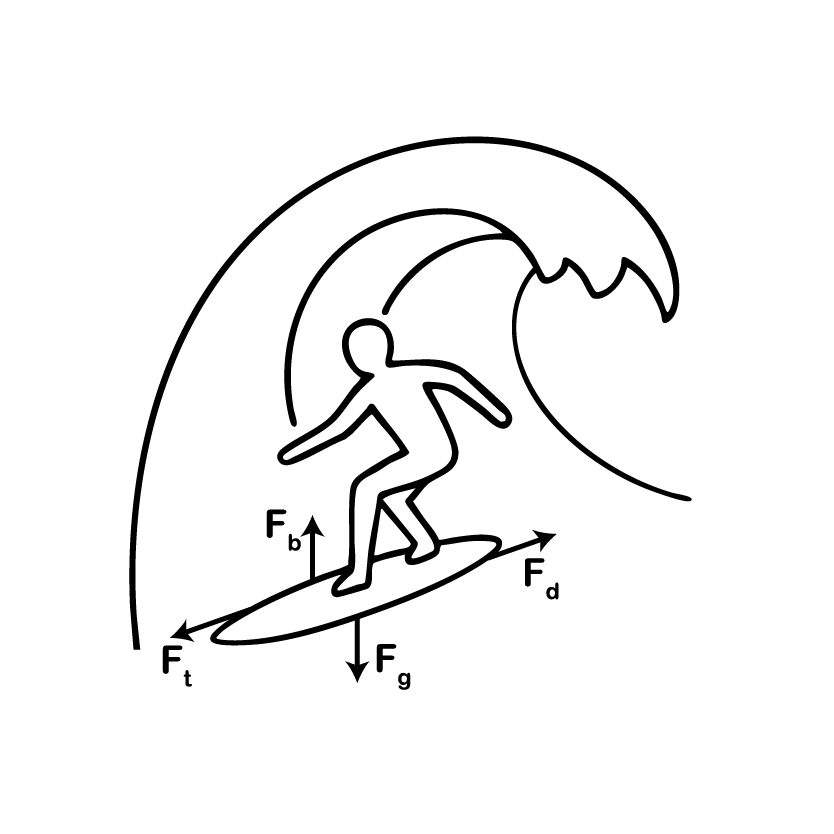
No gravity. No light-speed limit. No quantum effects. No temperature. The motion of objects under forces — ∑ Fi = ma — where modern science began.

Every other piece in this puzzle gets its position from this starting point. It still works perfectly for everyday speeds and scales.

Visual: The complex equilibrium of forces of a surfer.

(0, 0, 0, kB)
Classical Statistical Mechanics

A gas is trillions of colliding particles. Boltzmann's constant kB connects a particle's average energy to the temperature of the whole gas.

With it, heat, entropy, and pressure emerge from statistics. Boltzmann's tombstone in Vienna reads simply: S = kB log W.

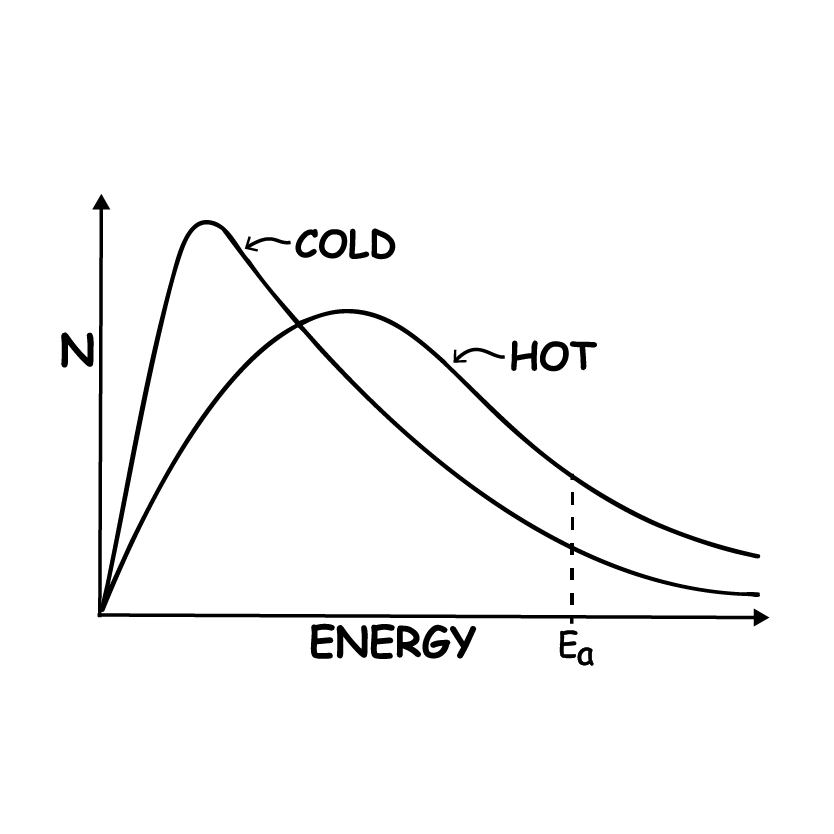
Visual: Terms such as "hot" and "cold" depend on the activation energy.

(G, 0, 0, 0)
Newtonian Gravity
Newtonian Gravity

Every mass in the universe pulls on every other. Newton's constant G governs falling apples and orbiting planets with the same equation.

G is the only one of Planck's four constants still not measured to full precision — experiments to nail it down are ongoing today.

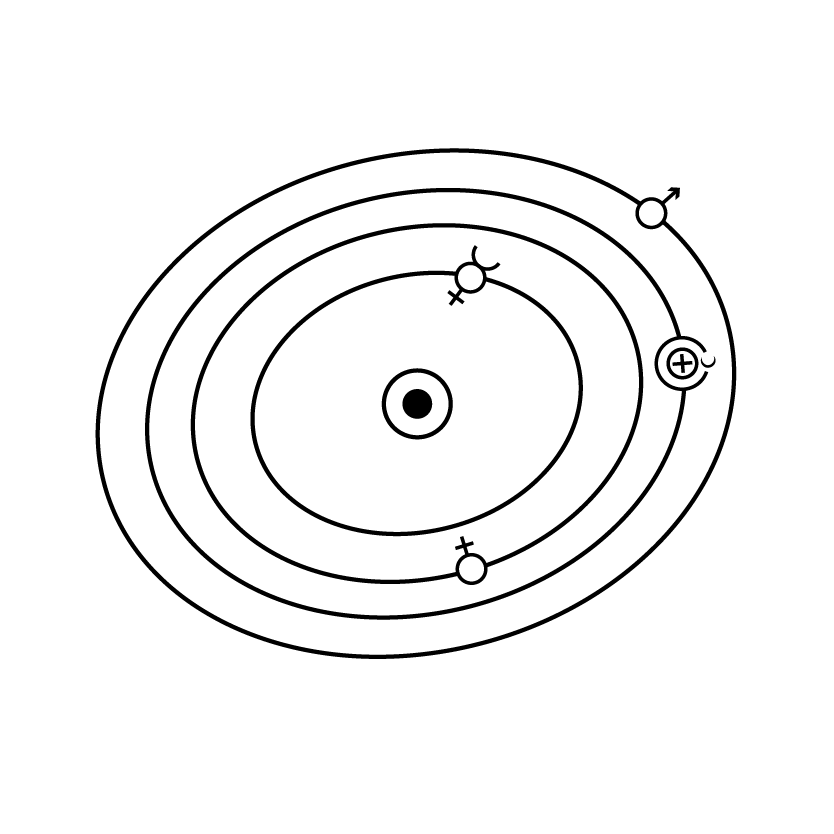
Visual: Mercury, Venus, Earth (with moon) and Mars elipses around the Sun.

(G, 0, 0, kB)
Statistical Mechanics & Newtonian Gravity
Statistical Mechanics and Newtonian Gravity

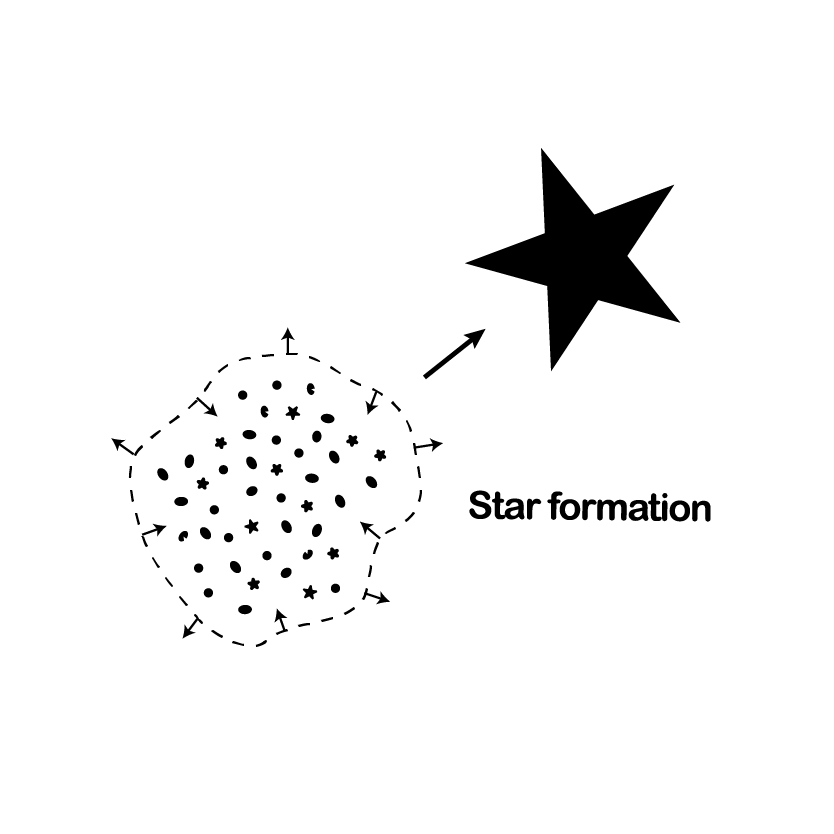
When gravity and thermodynamics meet, stars are born. A gas cloud collapses when gravitational energy outweighs thermal pressure — the Jeans mass.

No relativity, no quantum mechanics needed. The universe builds stars with just G and kB.

Visual: Star formation — simplest astrophysics.

(0, c⁻¹, 0, 0)
Special Relativity & Electrodynamics
Special Relativity and Electrodynamics

Nothing travels faster than light. Einstein's 1905 theory derived E = mc², time dilation, and unified electricity and magnetism.

The constant that matters is c⁻¹ — as c → ∞, special relativity collapses back to Newton. Maxwell's equations live here too.

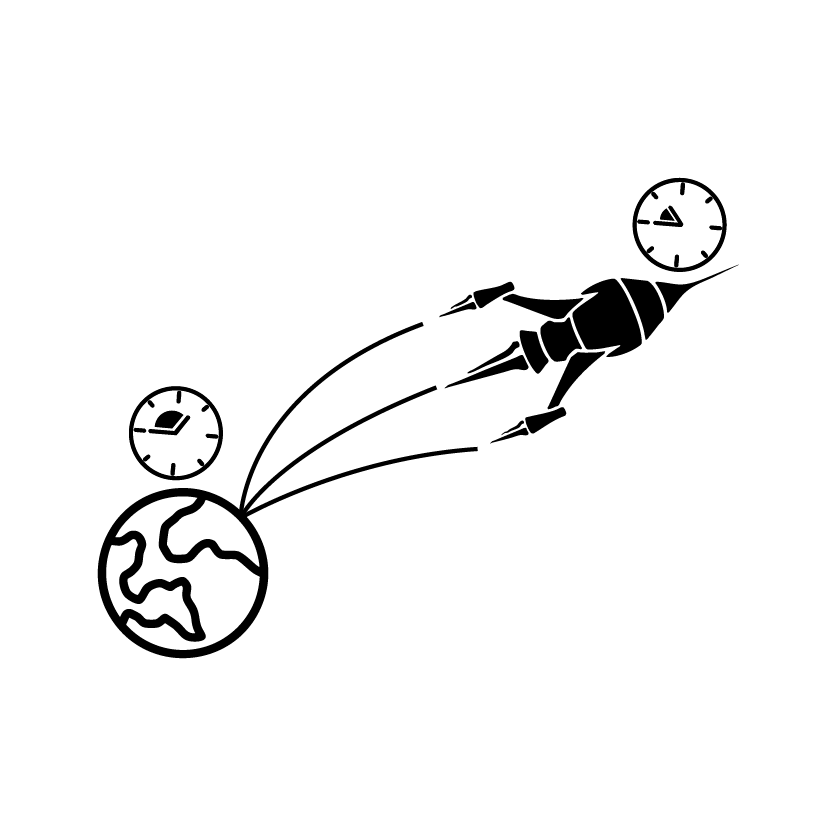
Visual: The twin paradox — a classic thought experiment in special relativity.

(0, c⁻¹, 0, kB)
Special Relativity & Statistical Mechanics
Special Relativity and Statistical Mechanics

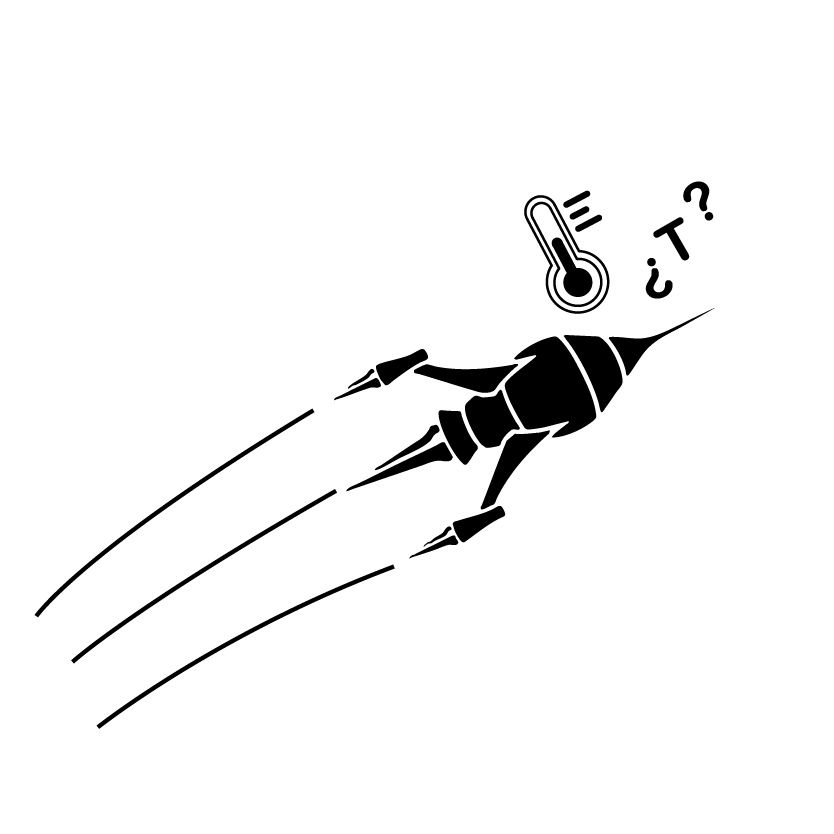
What temperature does a moving body have? This question has been debated since 1907 and remains unresolved.

Planck, Einstein, and others proposed different answers — and all may be correct, depending on how you define temperature for a moving system. A rare case of a theory that is more puzzle than solution.

Visual: What is the temperature of a moving body?

(0, 0, h, 0)
Quantum Mechanics
Quantum Mechanics

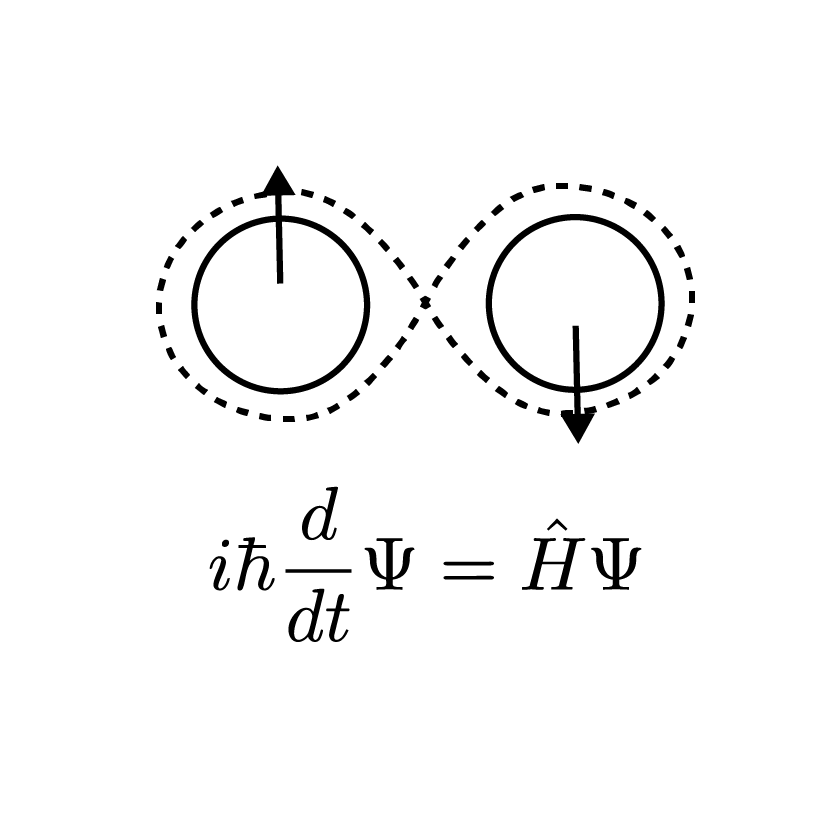
Particles don't have definite positions until measured. Energy comes in discrete packets. Planck's constant h sets the scale at which this strangeness kicks in.

The 1920s formulations of Schrödinger and Heisenberg transformed physics. Einstein protested: "God does not play dice." The dice disagree.

Visual: Entanglement of particles — their state cannot be described independently anymore.

(0, 0, h, kB)
Quantum Statistical Mechanics

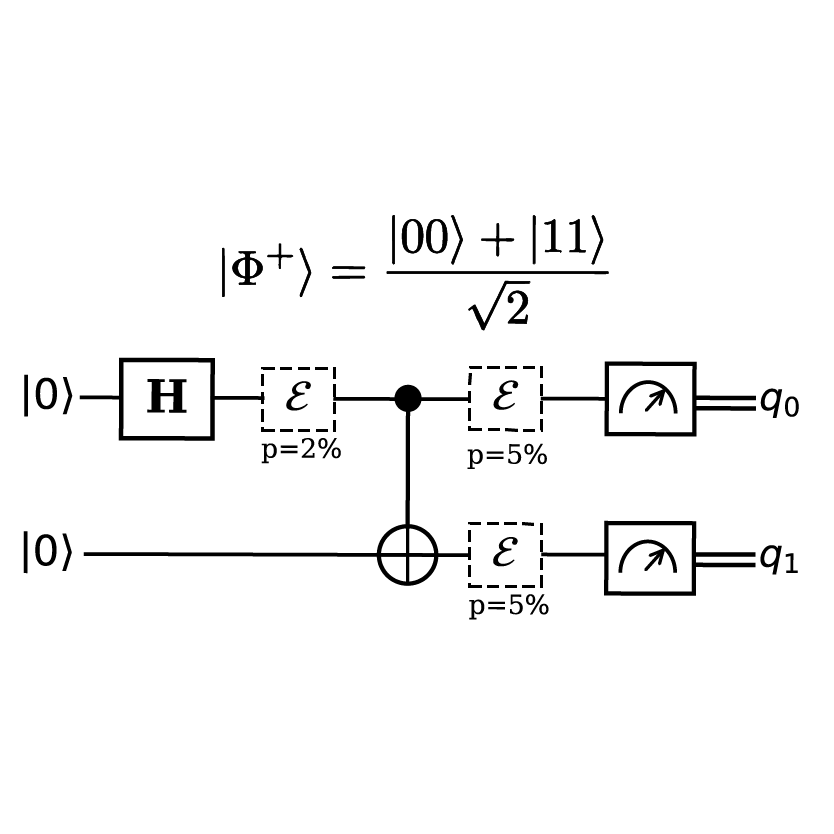
Truly identical particles can all pile into the same state (bosons) or refuse to share one (fermions). This gives us superconductors and Bose–Einstein condensates.

Planck's 1900 black-body law — the first quantum formula — lives here too.

Visual: A noisy qubit — the environment "leaks" information out of the qubit system.

(G, c⁻¹, 0, 0)
General Relativity
General Relativity

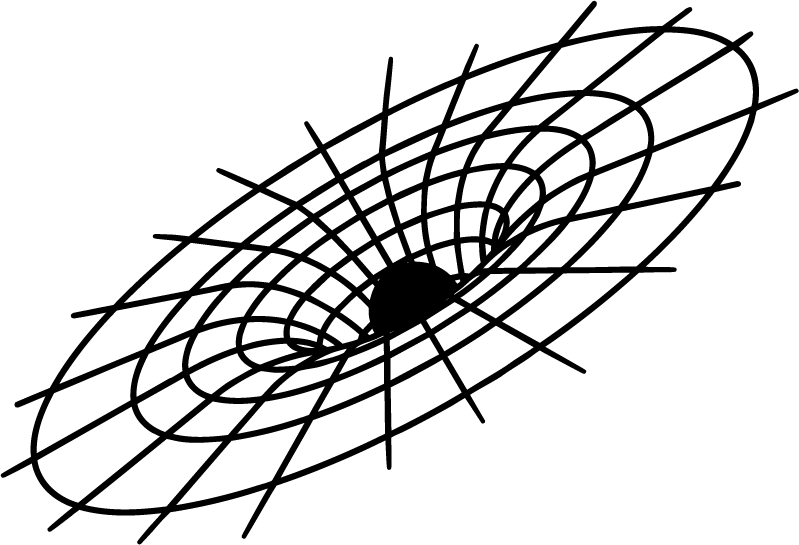
Mass curves spacetime. Objects follow that curvature — gravity is not a force, but geometry. Einstein's 1915 equations predicted black holes, gravitational waves, and the expanding universe.

All later confirmed. The image shows space curved by a massive body — not a force pulling things down, but a shape guiding them.

Visual: Space-time geometry is curved due to the mass.

(G, c⁻¹, 0, kB)
General Relativity & Statistical Mechanics
General Relativity and Statistical Mechanics

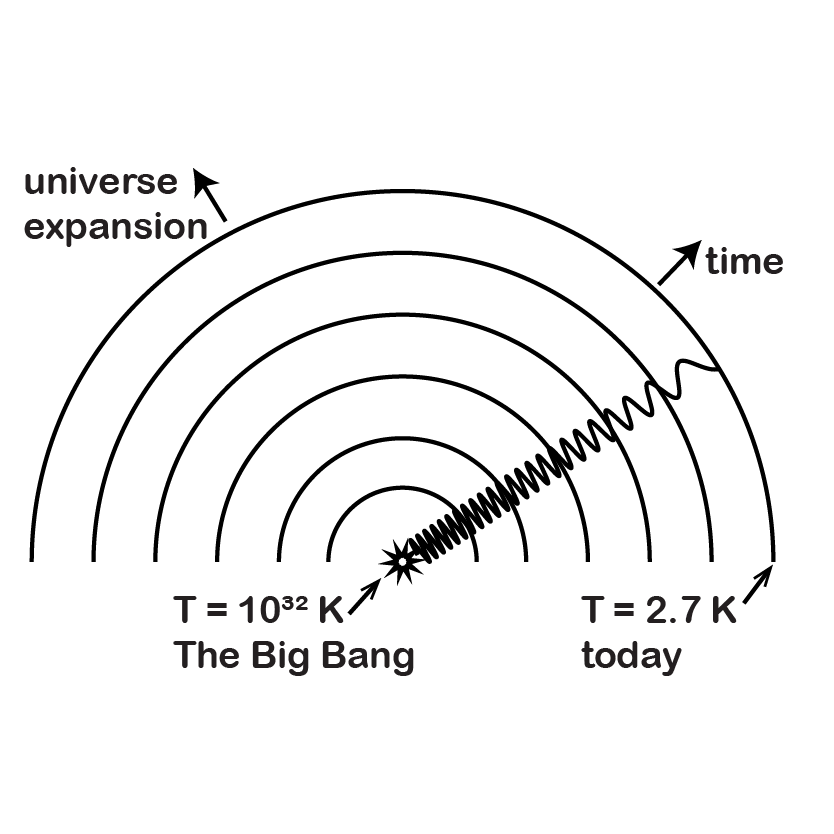
The Big Bang started hot. The universe has been cooling for 13.8 billion years. Today the cosmic microwave background reaches us at just 2.7 K.

Cosmology lives at this intersection of curved spacetime and thermodynamics, though quantum effects are never truly absent.

Visual: Cosmic microwave background radiation. The expanding universe is cooling down.

(0, c⁻¹, h, 0)
Quantum Field Theory

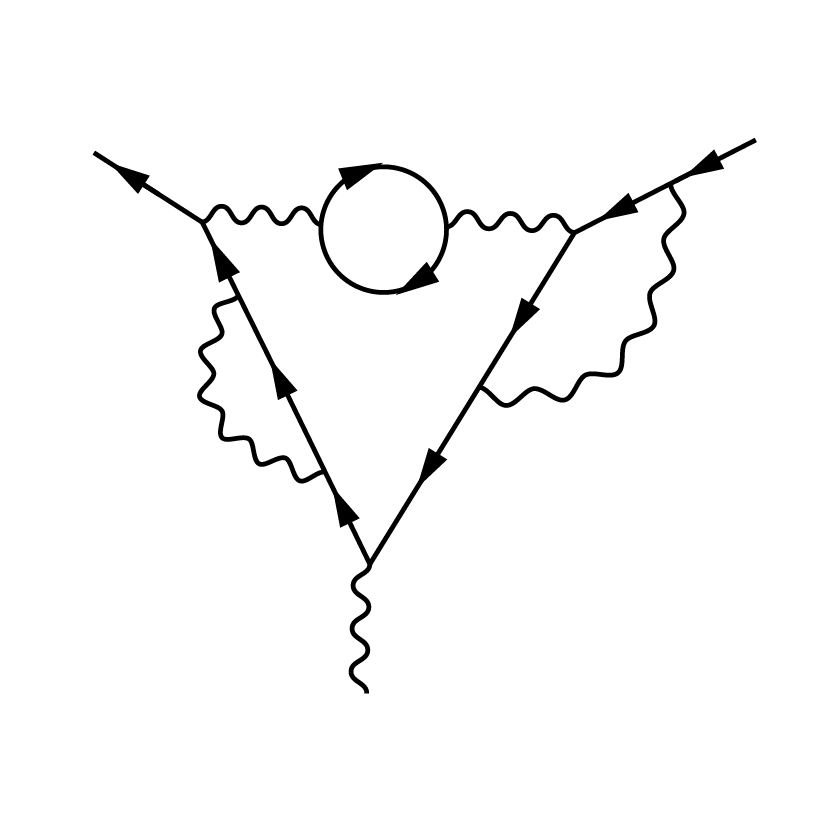
The Standard Model of particle physics. Every particle is an excitation of a field. QFT predicts the electron's magnetic moment to twelve decimal places.

The most precisely tested theory in science. Gravity is stubbornly absent: including G turns this into the elusive Theory of Everything.

Visual: Feynman diagrams — particles as excitations of quantum fields.

(0, c⁻¹, h, kB)
Quantum Field Theory & Temperature
Quantum Field Theory and Temperature

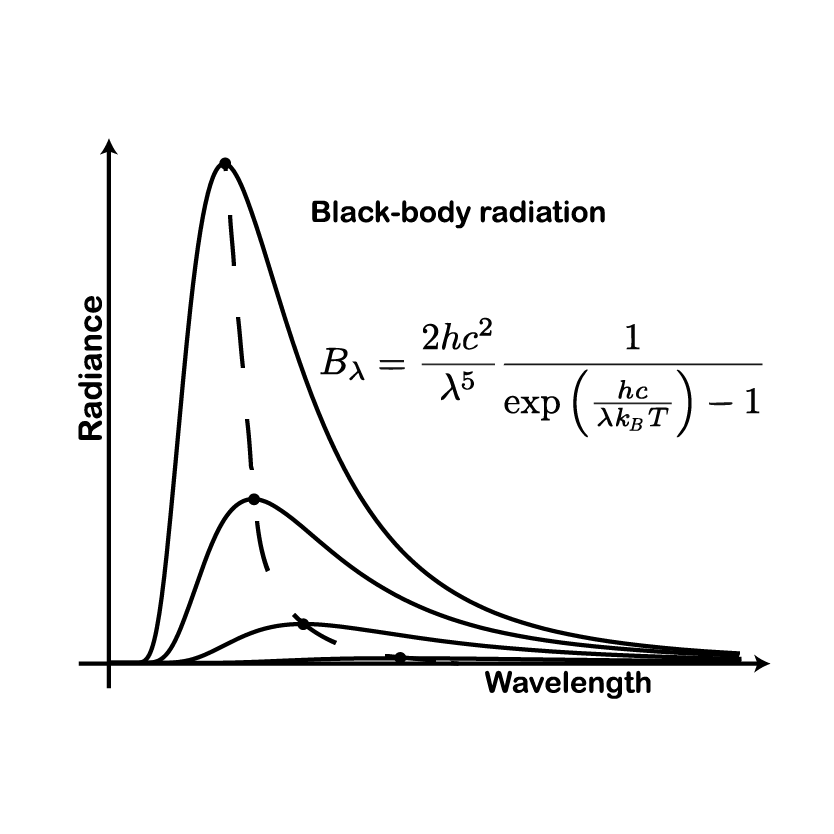
Planck's 1900 black-body formula was the first equation to combine c⁻¹, h, and kB — it launched quantum physics.

The Unruh effect predicts that an accelerating detector in empty space will measure a nonzero temperature. Hot vacuum: still unconfirmed experimentally, but theoretically compelling.

Visual: Three constants, the first quantum formula, and a glowing black-body.

(G, 0, h, 0)
Non-Relativistic Quantum Gravity

In 1975, the COW experiment showed that a neutron beam splits and recombines with a measurable phase shift caused purely by Earth's gravity.

Quantum and gravitational effects, no relativity needed. A quiet but profound confirmation that h and G do overlap.

Visual: Neutron interferometer in Earth's gravitational field.

(G, 0, h, kB)
Non-Relativistic Quantum Gravity & Temperature
Non-Relativistic Quantum Gravity and Temperature

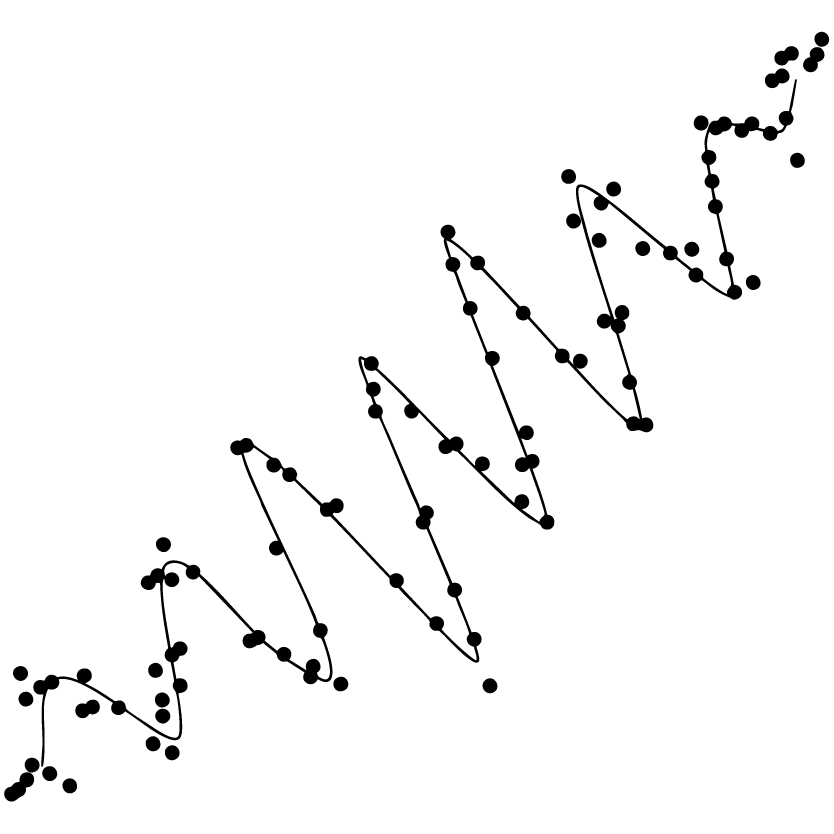
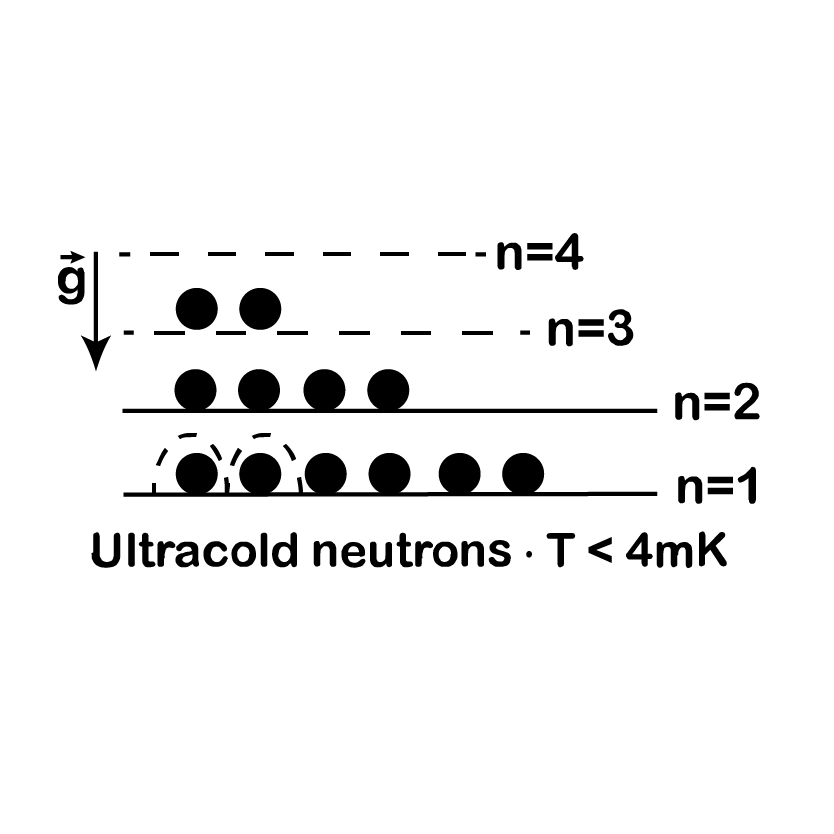
Ultracold neutrons bounce off surfaces like billiard balls and occupy discrete quantum states in Earth's gravity. Their measured lifetime gives two different answers depending on method.

The ~9-second discrepancy between "bottle" and "beam" experiments remains an open puzzle in physics today.

Visual: Quantum states in a gravitational bottle.

(G, c⁻¹, h, 0)
Theory of Everything (TOE)
Theory of Everything

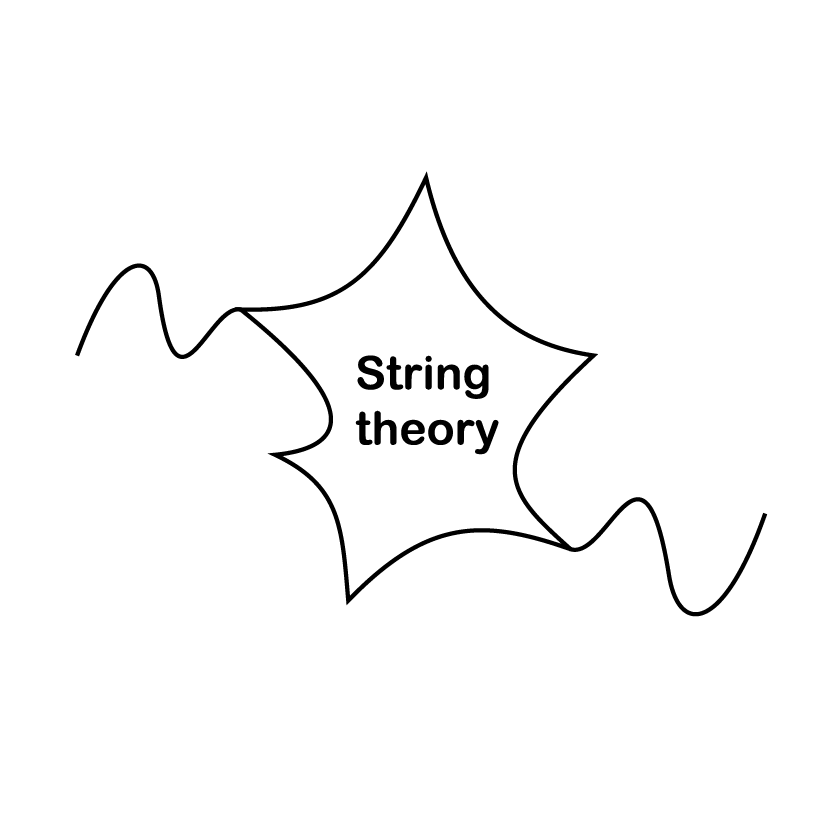
The holy grail: a single theory uniting quantum field theory and general relativity. Superstring theory and loop quantum gravity are the leading candidates.

Neither has been experimentally confirmed. The Planck length (~10⁻³⁵ m), where quantum gravity must matter, is 10²⁰ times smaller than a proton. Progress is slow, but the question is real.

Visual: String theory — one vision of the Theory of Everything.

(G, c⁻¹, h, kB)
Theory of Really Everything (TORE)
Theory of Really Everything

Black holes radiate. Hawking's 1974 discovery that black holes emit thermal radiation is the clearest hint that all four constants must eventually unite.

The Bekenstein–Hawking entropy links the thermodynamics of a black hole to the area of its horizon. TORE is not yet found, but black holes are already pointing the way.

Visual: This outermost piece contains all others. The assembled puzzle is TORE.

Geometry — projections

From four dimensions
to three

The hexadecachoron and the tesseract cannot be perceived directly. We make them visible through projections — reductions to lower-dimensional representations that preserve the key structural relationships between theories.

In the
public eye

From science communication contests to public outreach events, PlanckPlay has been present where physics meets people.

What’s
next

Two complementary experiences are in development: an extended reality application for navigating the hexadecachoron in space, and a series of interactive environments where the sixteen theories become playable.

● In development

XR application

Navigate the hexadecachoron in three-dimensional space. Enter each theory, understand its physical significance, and visualise its relationship to neighbouring theories through immersive environments.

Being developed as part of a Teaching Portfolio for secondary school physics education.

Register for early access →
● In development

Interactive environments

Each environment explores one or more of the sixteen theories through play. Navigate phenomena normally invisible — from quantum superposition to relativistic time dilation — as spatial, embodied experiences.

Finding your star — a stellar map of the night sky. Interact with constellations, galaxies, and planets, tracing the physics that governs each from Newtonian orbits to relativistic light-bending.

More environments to follow →

Participate &
help us improve

We are collecting data to evaluate the educational impact of PlanckPlay and the Hypercube of Physics. Your feedback directly informs the development of new models, XR experiences, and teaching materials. Please select the survey that best corresponds to your profile.

● For adults

Science enthusiasts

This survey is for visitors, museum-goers, and anyone with a general interest in physics who has interacted with the hexadecachoron model or PlanckPlay. It takes approximately 5–8 minutes to complete.

● For students

Students

This survey is for secondary and university students who have engaged with the Hypercube of Physics in a classroom or workshop context. It takes approximately 5–7 minutes to complete.

● For educators

Teachers & educators

This survey is for physics and science teachers who have used or evaluated PlanckPlay or the Hypercube of Physics as a teaching tool. Your professional perspective is especially valuable for our grant reporting. It takes approximately 5–7 minutes.

● For children

Children’s survey

A short, fun survey for children aged 6–12 who have tried the PlanckPlay puzzle or the paper hexadecachoron. Designed with picture buttons and face scales — parents are welcome to help. Available in German and English.